
Earthquake Early Warning - Blog
2023-06-26: Field crew installs EEW equipment and conducts maintenance at remote seismic stations
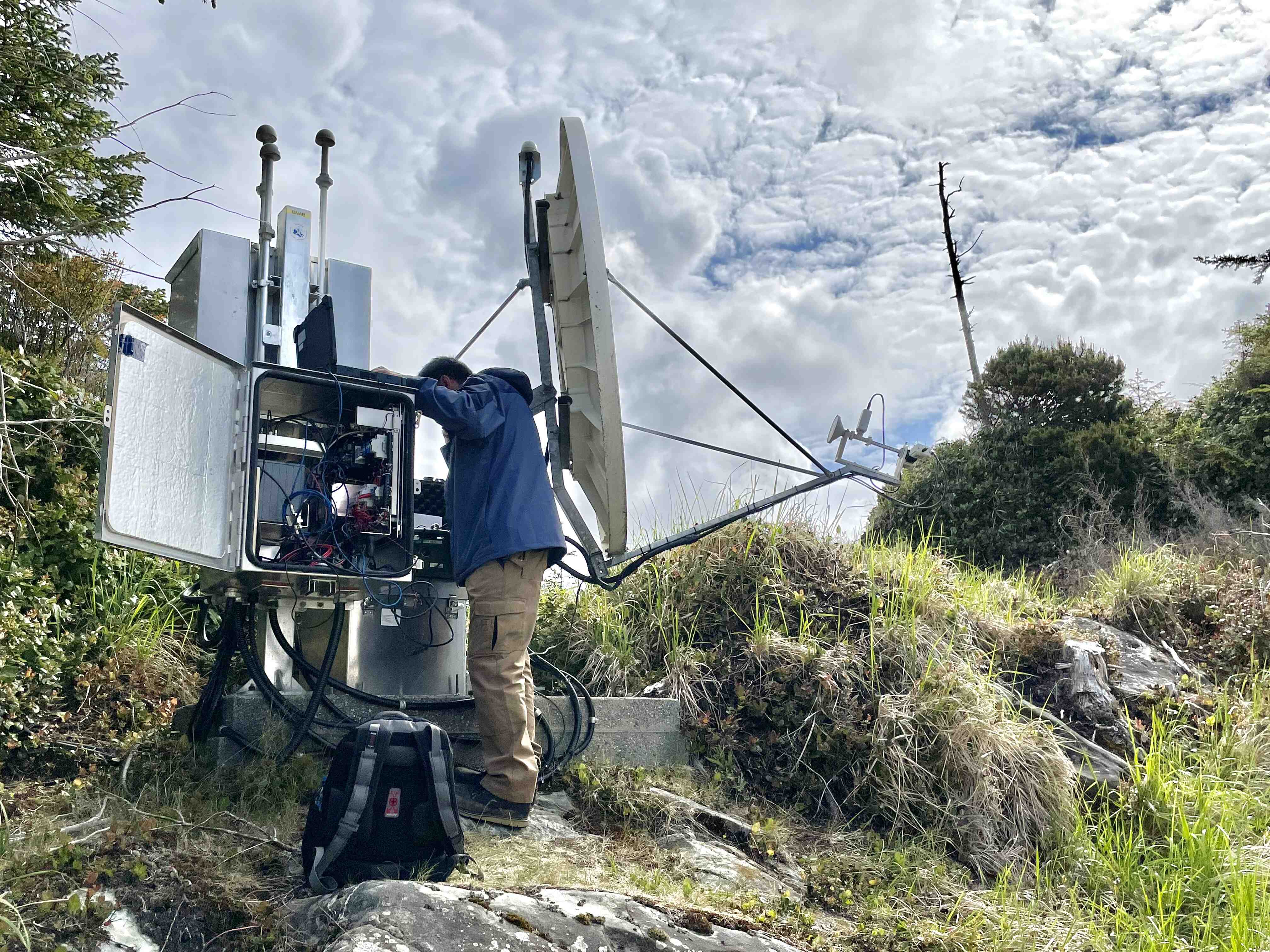
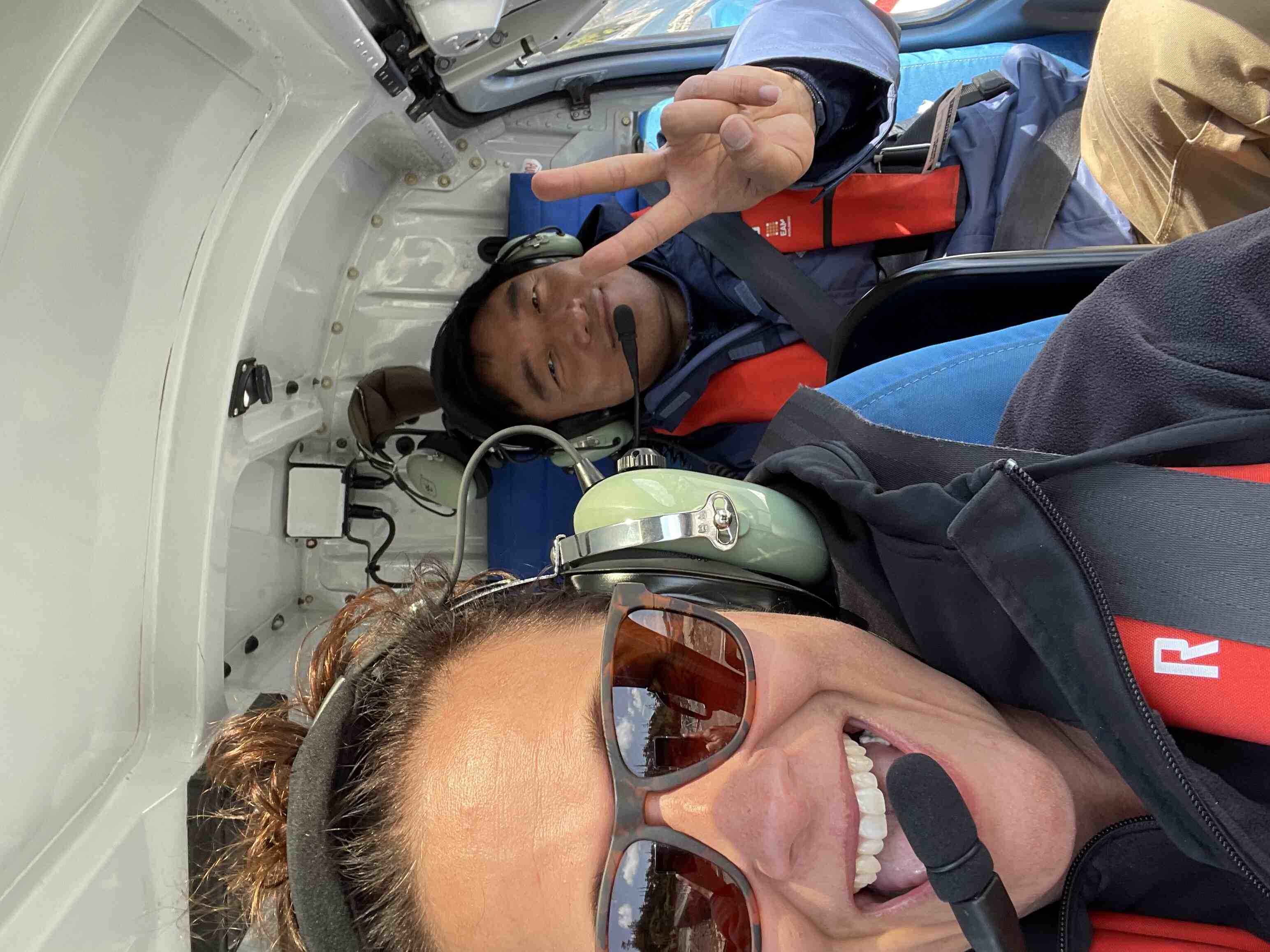
NRCan's Lisa Nykolaishen and Mingzhou Li have been visiting seismic stations in BC's North Coast region where they are installing new Earthquake Early Warning (EEW) stations, and conducting routine maintenance of the monitoring equipment. Some stations are located in remote, challenging terrains which require access by helicopter. The field teams work hard, but are rewarded with beautiful landscapes across Canada.
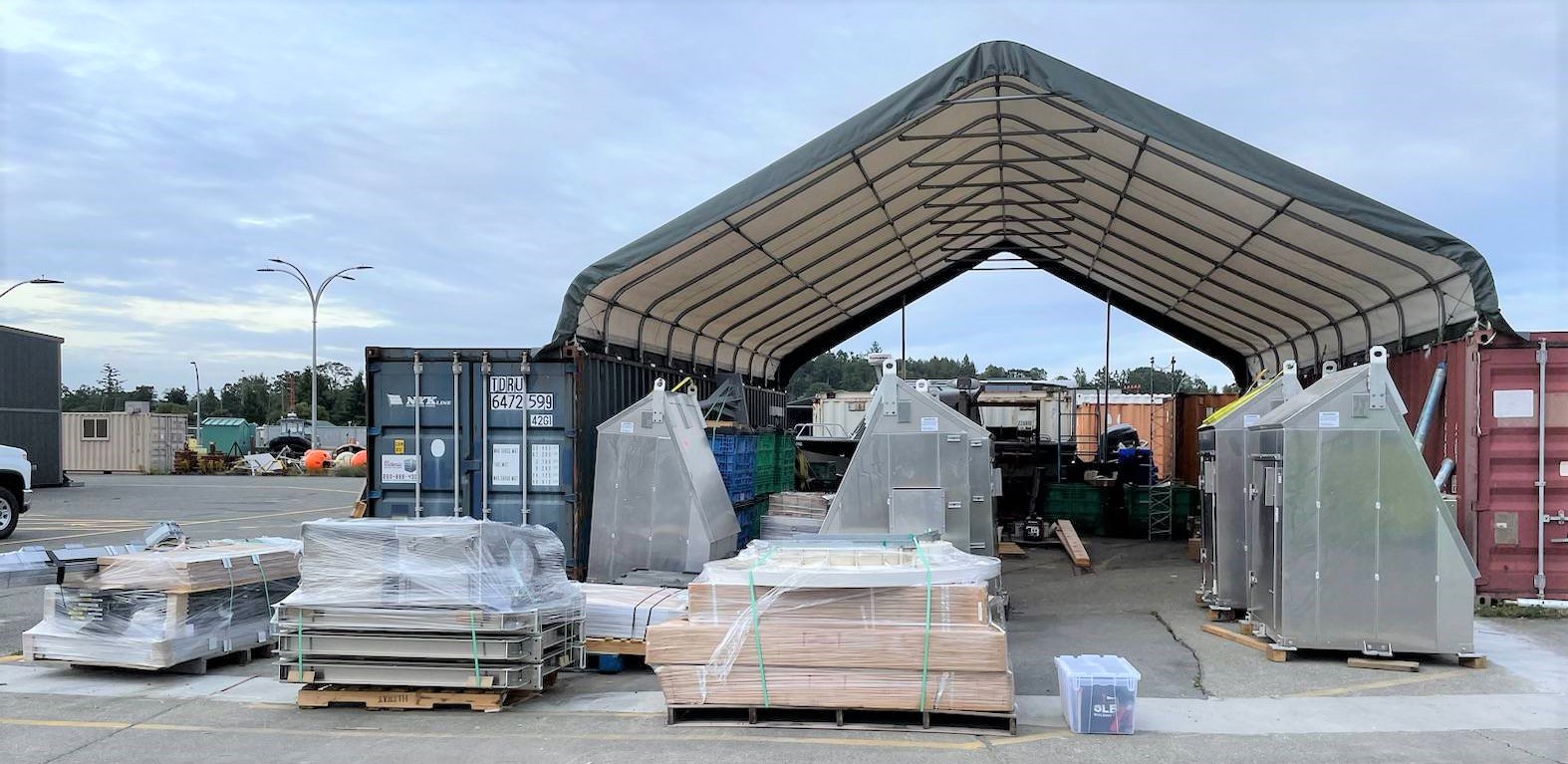
The NRCan field team has also been busy preparing EEW sensor station equipment over the past few months, for remote locations on Haida Gwaii in northern BC. The over 9,000 kg of gear will be sent via truck, ferry, helicopter and boat to these locations, where the team will install the equipment this summer.
2023-04-21: EEW session at Seismological Society of America conference

This week NRCan seismologists, Alison Bird and Claire Perry, co-hosted a session on Earthquake Early Warning (EEW) at the Seismological Society of America conference. Ten speakers presented on EEW programmes in Canada, the United States, Mexico, and Switzerland, and 14 posters showcased EEW systems and methods from around the world. Alison presented on the technical and public engagement activities for NRCan's EEW programme, and Claire presented on new research to enhance the EEW system.
NRCan earthquake researcher, Alison Bent, convened sessions on Seismic Data Collections and on Monitoring Climate Change with Seismology, and presented three posters. There were also other valuable sessions and discussions covering a wide range of earthquake-related topics, including earthquake hazard, active faults, methods for monitoring and evaluating earthquakes, modelling techniques, and associated hazards (such as tsunami).
2023-04-03: Earthquake Early Warning Data Centres
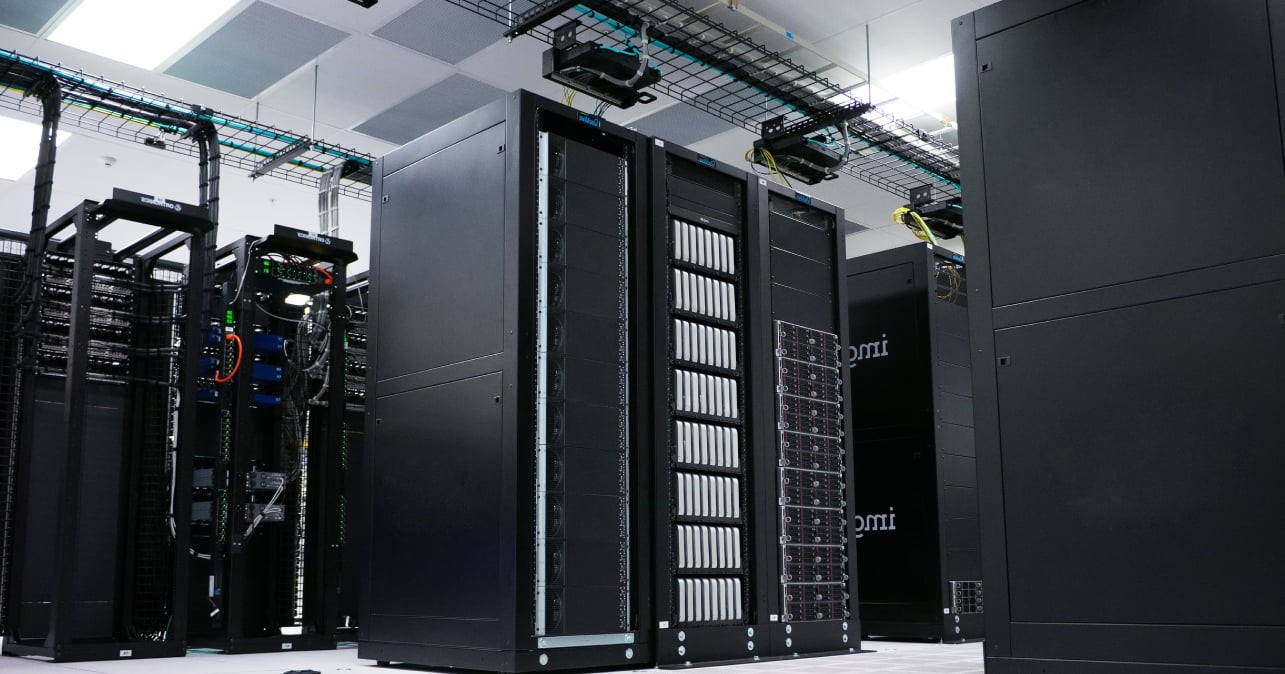
The earthquake early warning system reached a milestone recently, with the first of two data centres being established for the EEW program. The new data centre consists of 14 virtual computers, data storage, and networking to allow acquisition of data from up to 600 EEW sensor stations. The data will be transmitted from the stations to the data centres via various means of communication (Internet, cellular, satellite, and radio). Information will also be exchanged with similar data centres in the United States, to ensure both countries' EEW systems work optimally for earthquakes close to the border.
NRCan IT specialists are now working to install and configure software, enable the flow of data from the EEW stations, and collaborate with partners to ensure the open availability of data from this project. Additionally, NRCan is working on the optimal design of a second data centre which will provide redundancy for the EEW system. The data centre will issue EEW alerts to people and technical systems in Canada.
2023-03-27: Sharing Earthquake and Earthquake Early Warning information with First Nation communities in BC
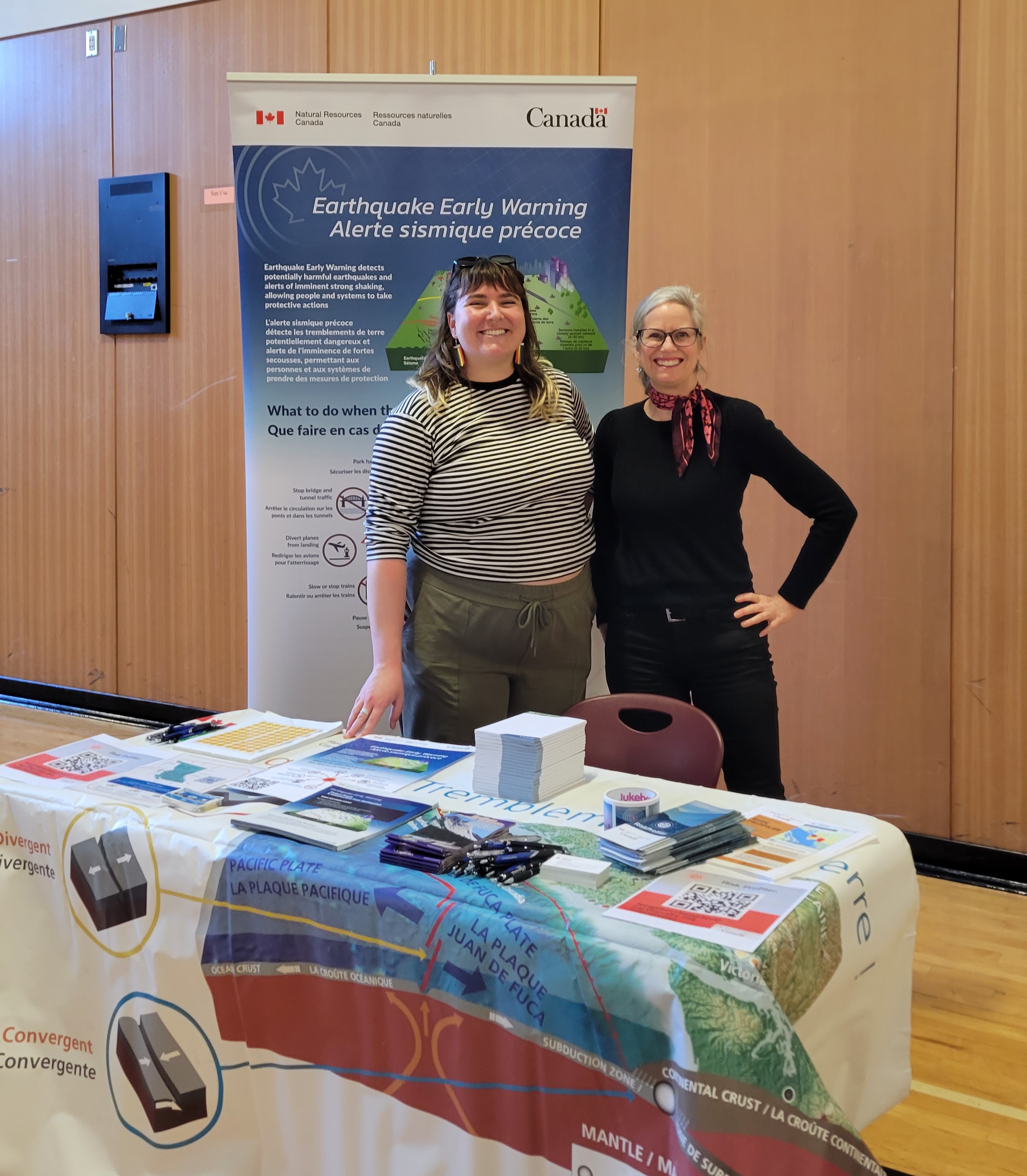
Last week NRCan scientists participated in a British Columbia Region Comprehensive Community Planning worshop at Stz'uminus First Nation on Vancouver Island. It was attended by members of First Nation communities throughout the province, including coordinators, planners, administrators, leaders, and youth. NRCan hosted a booth to share information about earthquakes in BC, the Earthquake Early Warning System, and the new Risk Profiler web-tool. Included in the workshop sessions, were engaging discussions on how to mitigate risks, prepare for emergencies, and respond to various hazard events, including earthquakes.
2023-02-21: Learning from global earthquakes: Christchurch 2011
Canada suffered a number of strong, damaging earthquakes in the first half of the 20th century, but has experienced few strong events since. In order to learn about how earthquakes are likely to impact our towns and cities in these modern times, we look to major earthquakes around the world.
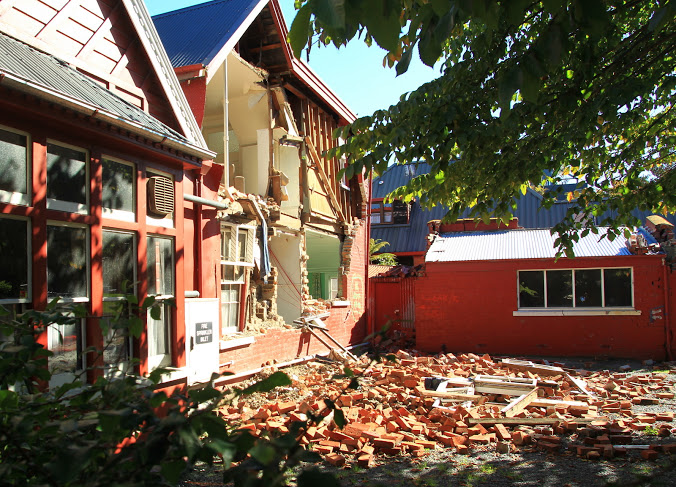
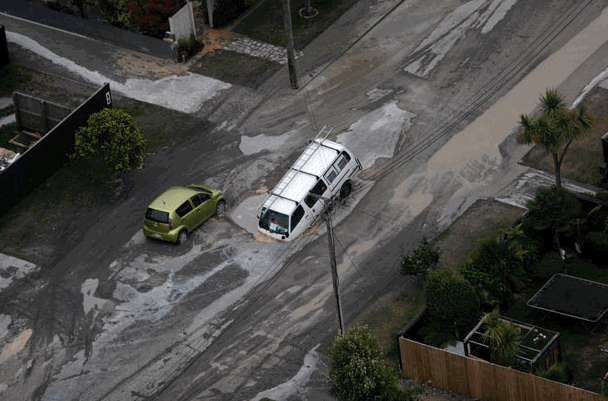
The M6.3 earthquake in Christchurch, New Zealand which occurred 12 years ago (photos, above, by Ross Becker and Brett Phibbs), for example, is a reliable proxy for what might happen to Victoria in a similar shallow, crustal earthquake very close to the city. The cities share similar geographies, populations, building codes, industries, and other characteristics. By examining the impacts of the Darfield event, we can seek ways to reduce or even eliminate similar impacts in Victoria and other cities in Canada.
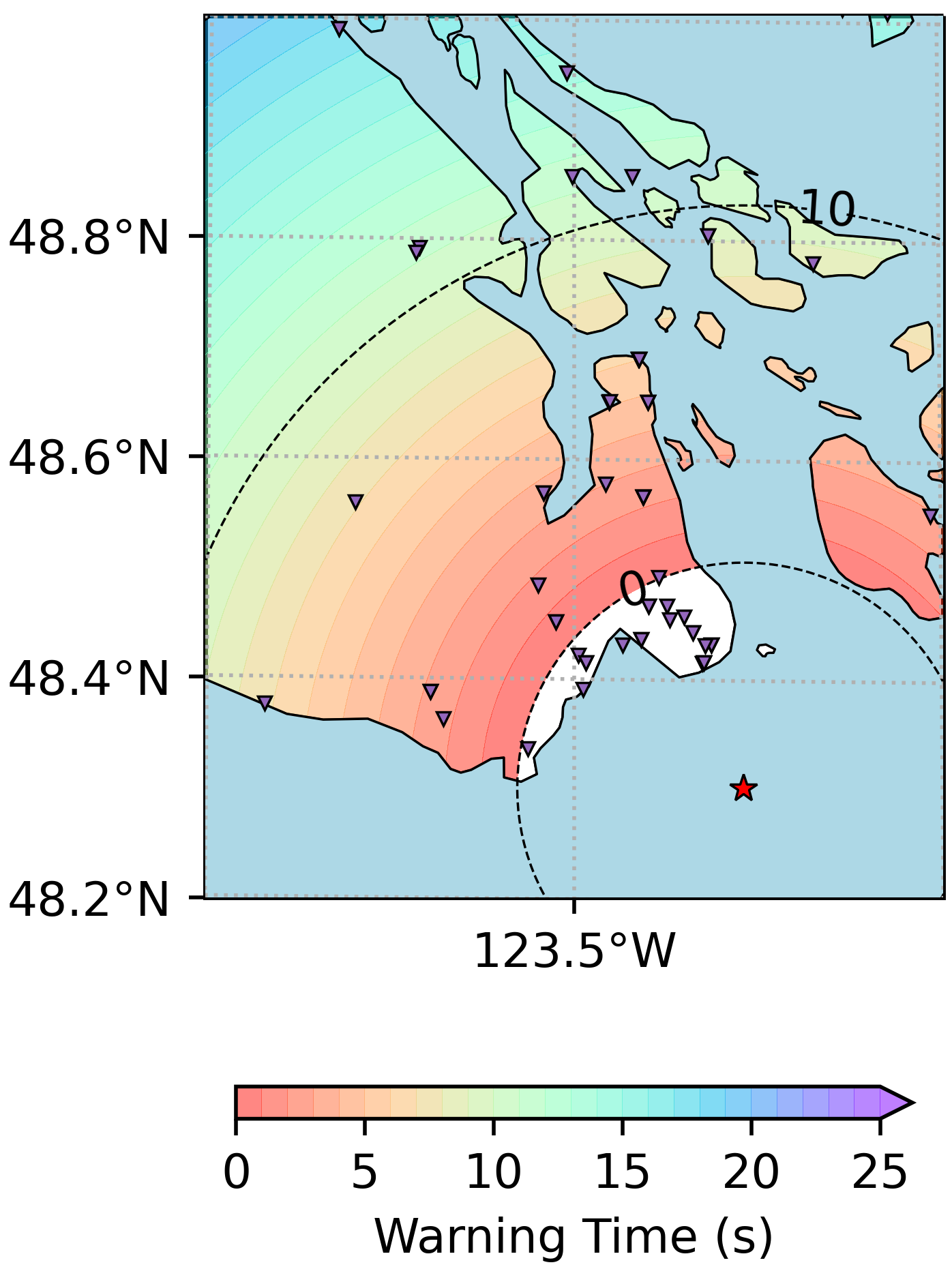
We have calculated how the Earthquake Early Warning system we are developing would behave in such an event in Victoria. Unfortunately, this is one of the rare cases of a shallow earthquake very close to a populated centre, where alerts would have very short warning times, or even arrive too late in neighbourhoods close to the epicentre (in what is known as a Late Alert Zone
, white area on the map, above). In other words, it is a good example of why it is necessary to have multiple resiliency measures in place: an EEW system, a seismically resistant building code, and public education on how to respond to earthquake shaking and EEW alerts.
2023-01-26: Anniversary of Cascadia Subduction Zone Megathrust Earthquake
On this day in 1700, the west coast of North America experienced its most recent megathrust earthquake and tsunami. The Cascadia Subduction Zone (CSZ), which extends from Vancouver Island to northern California, ruptured in a major earthquake with a magnitude around 9, causing strong shaking that would have lasted a few minutes, and triggering a tsunami which impacted the coastlines, devastating coastal villages. The Indigenous communities created a story around this event: a thunderbird and a whale fight, creating a great shaking of the earth and, in the struggle, the whale's tail strikes the ocean, causing enormous waves.
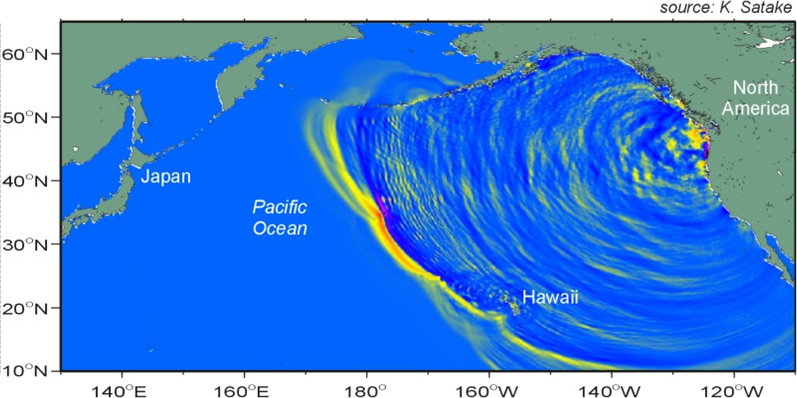
The date of the event is known because the tsunami travelled across the ocean and caused damage in Japan. Researcher Kenji Satake used the timing and heights of the waves recorded in Japan to reverse-model the event, determining it would have occurred along the CSZ around 9pm on 26th January 1700. Not only does this fit with the Indigenous accounts of the event happening during winter, just after they had gone to bed, but the year is corroborated with carbon and tree-ring dating of trees which had been submerged in seawater due to the coast subsiding, and in turbidite deposits along the coast (Goldfinger).
Once the EEW system is operational and the CSZ next ruptures, people in Tofino will have up to 237 seconds of warning before the strongest shaking begins, those in Victoria will have 4 to 213 seconds, and those in Vancouver will have 21 to 239 seconds. The range in warning times is due to the variation in possible ruptures along the CSZ.
2023-01-17: Strathcona Regional District installing EEW stations at remote sites along BC coastlines
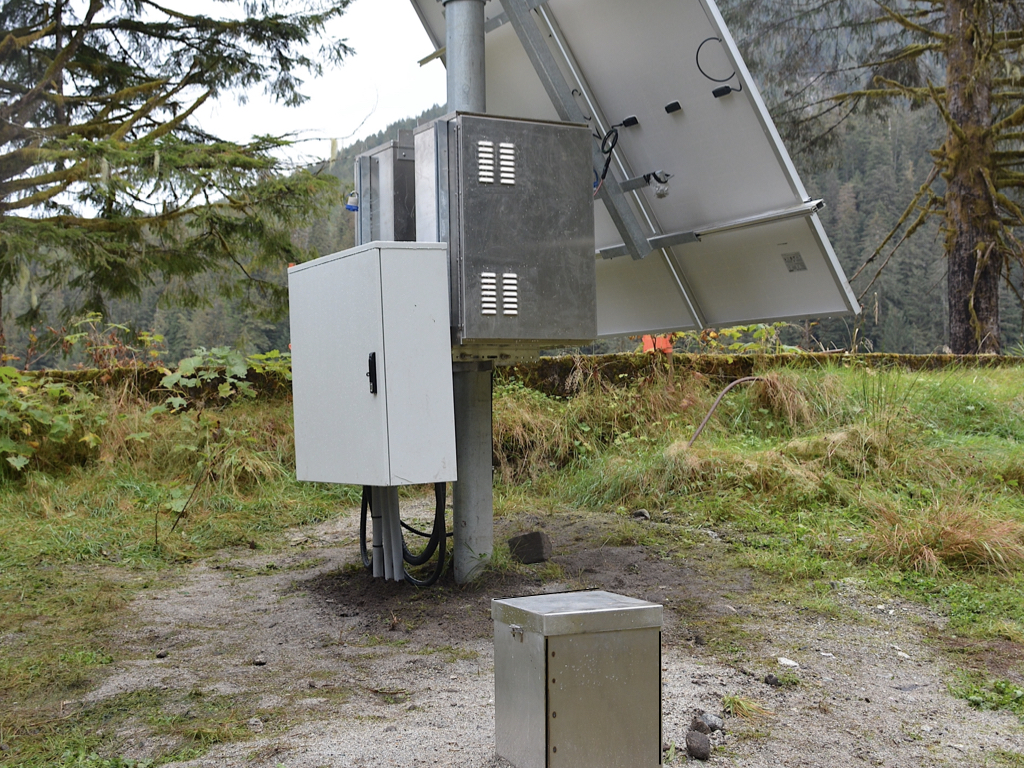
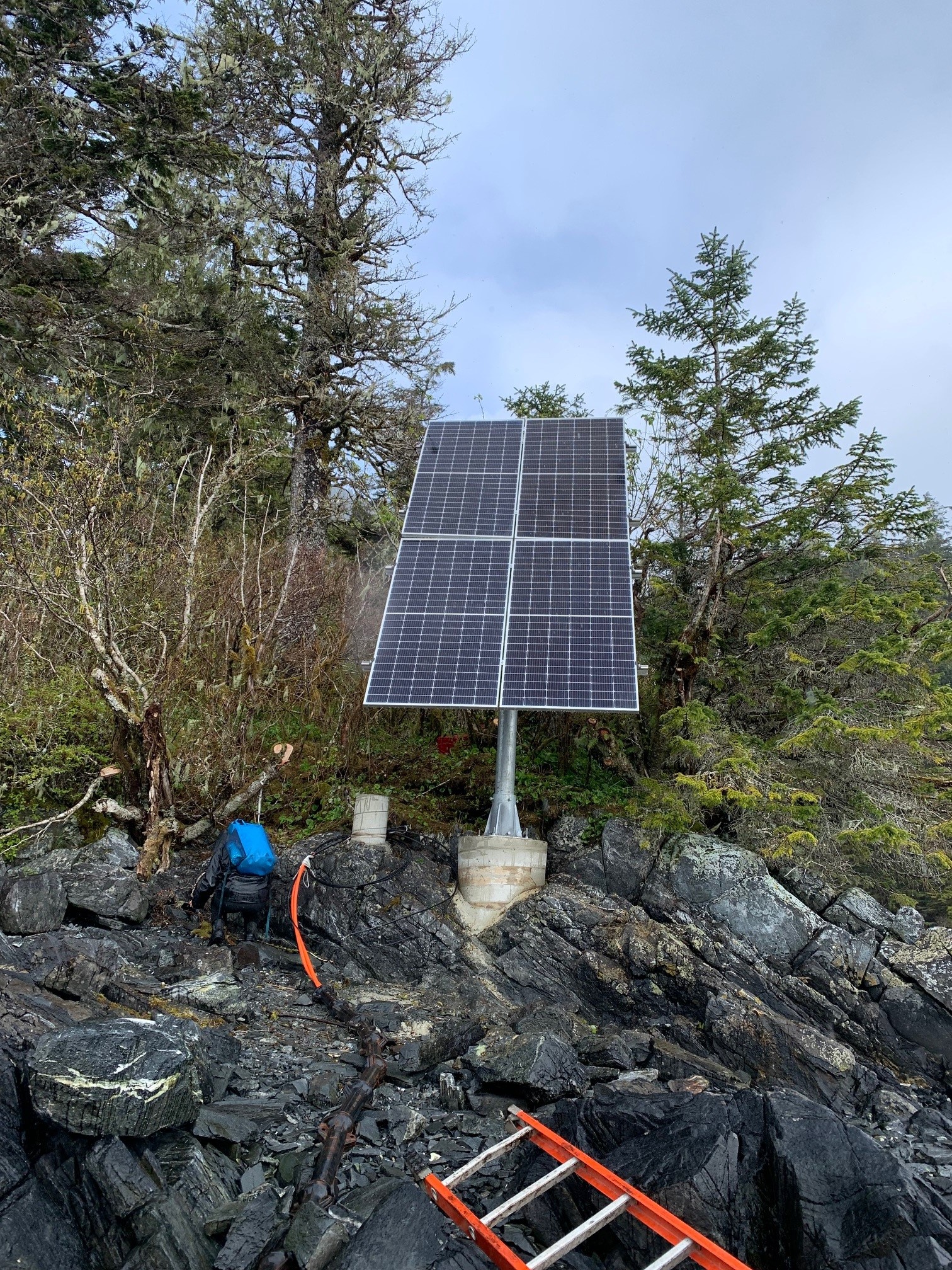
The Strathcona Regional District (SRD) through its partnership in the Connected Coast Network is installing 25 EEWS sensor stations, funded by Natural Resources Canada, at remote, coastal sites in British Columbia. All SRD's stations will use the Connected Coast's subsea fibre optic communication technology; this will improve the reliability of the EEW system, by providing a fast, alternative way to transmit data. The sites for the EEW stations were selected to strengthen and enhance the EEW system for these and neighbouring communities.
2023-01-11: Installation of 100th station in national EEW network
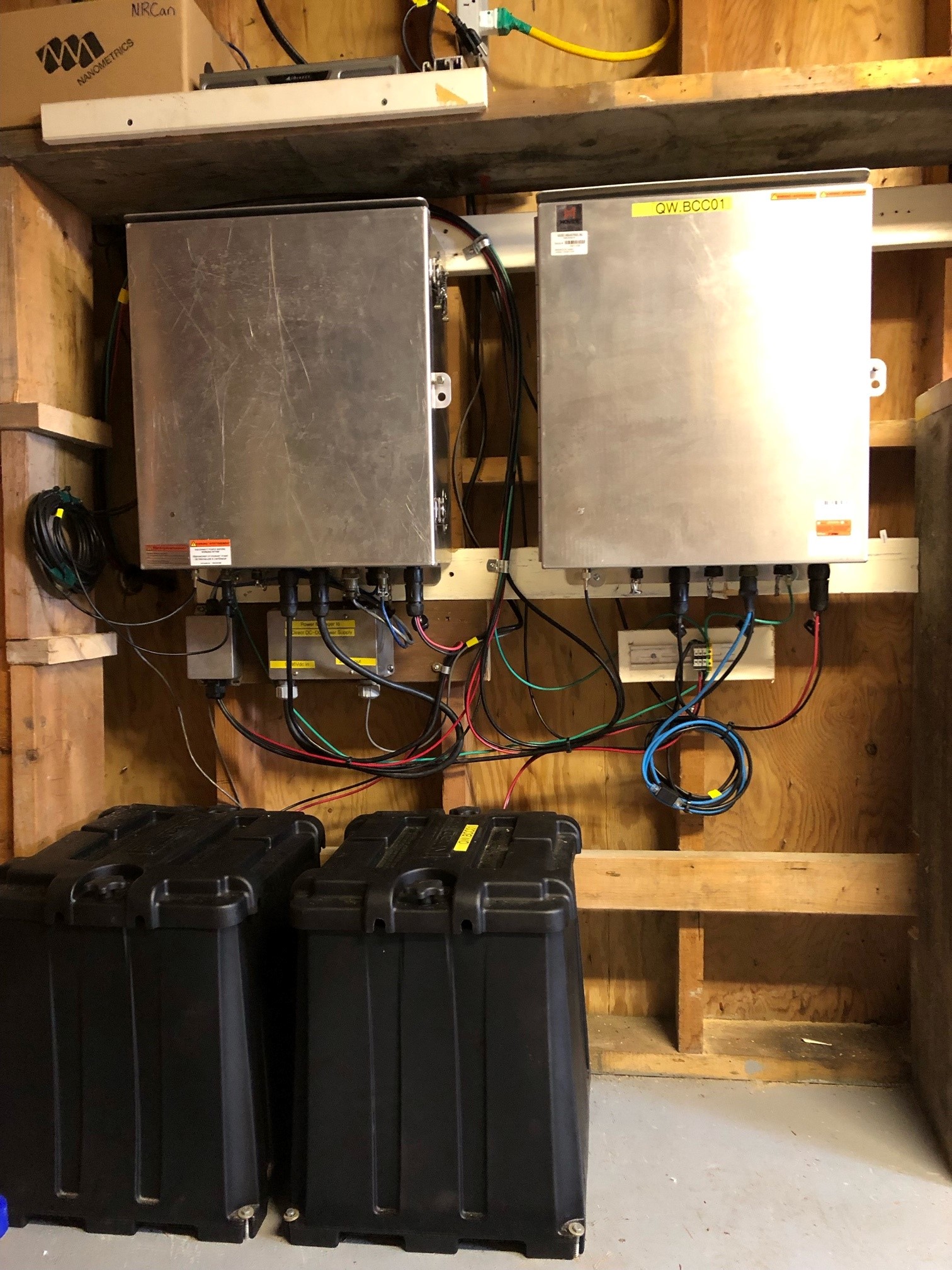
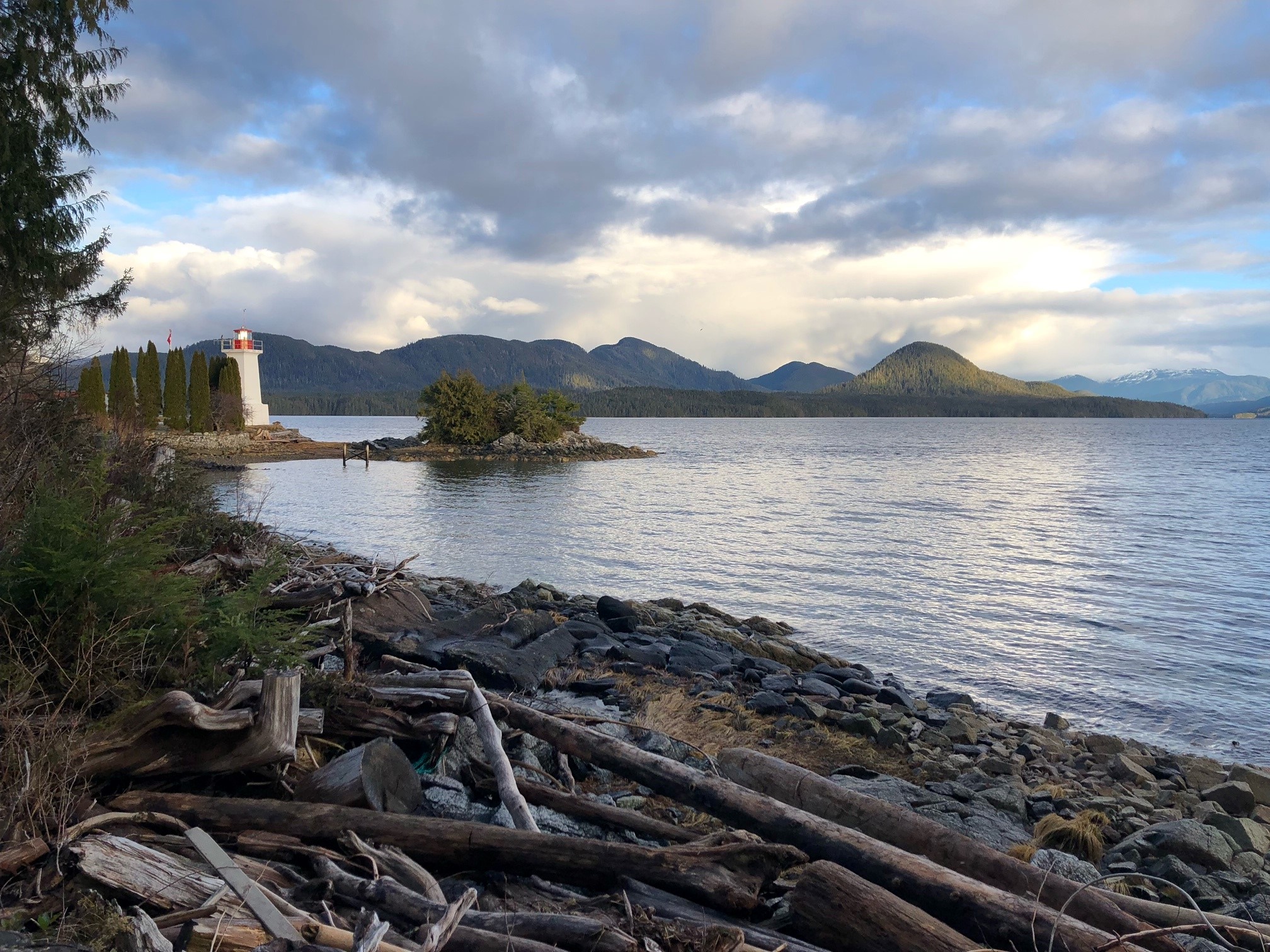
On Saturday, we reached the exciting milestone of 100 stations installed in the national Earthquake Early Warning (EEW) network. The 100th station was installed at Dryad Point Lightstation near Bella Bella.
Once complete, in 2024, the network will comprise of roughly 400 stations in areas of moderate-to-high earthquake risk: in western British Columbia, eastern Ontario, and southern Quebec. These are regions where there is both the threat of significant earthquakes, and concentrations of population and critical infrastructure (such as rail lines and power stations).
2022-12-08: Coastal First Nations' Great Bear Initiative installs EEW stations in their communities


Coastal First Nations - Great Bear Initiative (CFN-GBI) is installing eight Earthquake Early Warning (EEW) sensor stations, within CFN-GBI communities and at the Hakai Institute on Calvert Island, BC. So far, five stations have been installed, at Nuxalk Nation's community at Q'umk'uts' (Bella Coola), Gitxaala, Gitgaat, Metlakatla, and Hakai. The stations, funded by Natural Resources Canada, will expand the area of coverage of the national EEW system along the northern mainland coast of British Columbia, and improve alert times for the region, allowing people more time to take protective actions.
The project will also improve the communities' resilience to earthquakes, through educational efforts including how community members can protect themselves when they receive EEW alerts. This initiative is being coordinated by Patrika McEvoy (Kwaa Tsaaps), whose responsibilities include establishing suitable locations for the sensors stations within each community, acting as liaison to the communities, and installing and testing the EEW equipment. Patrika has received training from NRCan and the supplier of the earthquake sensors, Nanometrics, to enable her to do this work.